

Business Taxes, General Information, General Tax Topics, Self Employed, Small Business, Tax Debt, Tax Deductions, Tax Reduction, Uncategorized

What is the De Minimis safe harbor $2,500 Expensing ($5,000 with AFS)?

adult chill computer connection

It’s a new year, and in preparation for the Chicago small business tax preparation season, you can elect the de minimis safe harbor to expense assets costing $2,500 or less ($5,000 with audited financial statements or something similar).

The term “safe harbor” means that the IRS will accept your expensing of the qualified assets if you properly abided by the rules of the safe harbor.

Here are four benefits of this safe harbor:

  1. Safe harbor expensing is superior to Section 179 expensing because you don’t have the recapture period that can complicate your taxes.
  2. Safe harbor expensing takes depreciation out of the equation.
  3. Safe harbor expensing simplifies your tax and business records because you don’t have the assets cluttering your books.
  4. The safe harbor does not reduce your overall ceiling on Section 179 expensing.

newsletter
Here’s how the safe harbor works. Say you are a small business that elects the $2,500 ceiling for safe harbor expensing and you buy two desks costing $2,100 each. On the invoice, you see the quantity “two” and the total cost of $4,200, plus sales tax of $378 and a $200 delivery and setup charge, for a total of $4,778.

Before this safe harbor, you would have capitalized each desk at $2,389 ($4,778 ÷ 2) and then either Section 179 expensed or depreciated it. You would have kept the desks in your depreciation schedules until you disposed of them.

Now, with the safe harbor, you simply expense the desks as office supplies. This makes your tax life much easier.

To benefit from the safe harbor, you and I do a two-step process. It works like this:Schedule-button-nb

Step 1. For safe harbor protection, you must have in place an accounting policy—at the beginning of the tax year—that requires expensing of an amount of your choosing, up to the $2,500 or $5,000 limit. We can help you with this.

Step 2. When we prepare your tax return, Howard Tax Prep LLC make the election on your tax return for you to use safe harbor expensing. This requires that I attach the election statement to your federal tax return and file that tax return by the due date (including extensions).

Although we’ve given you the basics, this is not an all-inclusive article. Should you have tax debt help questions, need Chicago business tax preparation, business entity creation, business insurance, or business compliance assistance please contact us online, or call our office toll free at 1-855-743-5765 or locally in Chicago or Indiana at 1-708-529-6604. Make sure to join our newsletter for more tips on reducing taxes, and increasing your wealth.

Schedule-button-nb

Never miss another tip again! Join our newsletter, to receive tax reduction/wealth building tips delivered right to your inbox!

newsletter

Business Taxes, General Information, General Tax Topics, Self Employed, Small Business, Tax Deductions, Uncategorized, Vehicles

Commercial Fuel Card Without A Personal Guarantee.

gas card

Commercial Fuel Card

Gas Cards Without A Personal Guarantee

Would you like to free up some cash so that you can increase your marketing budget, purchase more supplies, or reward your employees? Have you heard about obtaining business credit without a personal guarantee, but haven’t been able to secure your own business credit? Are you a small business owner that has damaged personal credit? Have you been told that you can’t get business credit if you have bad personal credit? If any of these things apply to you, you’ve come to the right place!
To start, let us explain what a “personal guarantee is.” A personal guarantee means that the owners will be held personally liable for the debts of their business. Suppose you have a LLC Howard Tax Prep LLC has partnered with a national gas chain (comparable with Exon Mobil, Citgo, etc. with over 18,000 locations worldwide) to offer small business owners (being defined as businesses with revenues under 1 million dollars) fuel cards that report business payment history to Dunn and Brad Street, and Equifax every 30 days!
bp 2

Only verified businesses that are structured as a LLC, S-Corp, or C-Corp with a Dun and Brad Street number will qualify. Because this is not a publicly marketed program, your business must be verified, prior to receiving the name of the fuel company (but trust us, you can find a station near you).  

The best part about this offer? THE CARDS ARE ISSUED WITHOUT ANY PERSONAL LIABILITY TO THE OWNERS, & WITHOUT THE USE OF THE OWNERS PERSONAL CREDIT. If you need a truck driver fuel card, Uber driver fuel card, Lyft driver fuel card, or just a general small business owner fuel card, we can help! 

WHAT ARE THE DETAILS?

  • National fuel provider. Qualified businesses that are ready to move forward will be given the name of the fuel company prior to paying the 1 time $49.95 Howard Tax Prep LLC processing fee.
  • Minimum deposit of $200 for a $500 credit line is required.
  • Accounts are reviewed every quarter for credit line increases.
  • After 12 months of ON TIME PAYMENTS, your deposit will be returned.

WHAT ARE THE REQUIREMENTS?

  • Business Must Be Structured As A LLC, Corporation, or S-corporation.
  • Must have a BUSINESS CHECKING account.
  • Must Agree To Make ON-TIME Payments.
  • Deposit Payment Can Only Be Drafted From Business Checking account.

Who should use fuel cards?

Owner Operator Truck Driver

image40

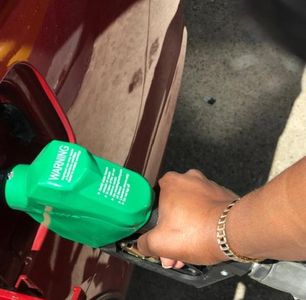
Owner Operator Truck Drivers no longer have to use personal credit cards or cash profits to purchase fuel! Reduce driver fraud by setting fuel limits & restricting usage. Save on fuel cost, while building your business credit Paydex score.     

  • The principal or owner is not personally liable for any bad debt.
  • The account will be in the name of the business.
  • Helps to Establish & build business credit.
  • Account payment history reported to DnB and Equifax every 30 days.
  • Accepted at over 18,000 locations Worldwide.
  • Free online invoicing.
  • Activate new cards as needed.
  • Restrict cards with fuel only limits & purchase restrictions during non-business hours.
  • Save up to 6¢/gal* on fuel purchases at thousands of locations in the U.S.
  • Earn rebates on fuel at branded locations.

GET YOUR CARD NOW!

Small Business Owner

image41

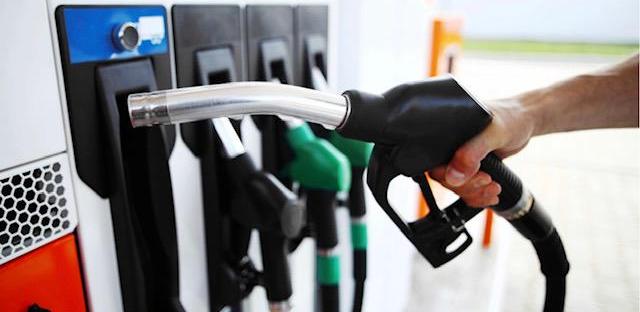
Small business owners no more using your profits & personal credit cards to cover fuel cost. Use the cash you save and apply it toward marketing, inventory, and more! Save on fuel cost, while building your business credit Paydex score. 

  • The principal or owner is not personally liable for any bad debt.
  • The account will be in the name of the business.
  • Helps to Establish & build business credit.
  • Account payment history reported to DnB and Equifax every 30 days.
  • Accepted at over 18,000 locations Worldwide.
  • Free online invoicing.
  • Activate new cards as needed.
  • Restrict cards with fuel only limits & purchase restrictions during non-business hours.
  • Save up to 6¢/gal* on fuel purchases at thousands of locations in the U.S.
  • Earn rebates on fuel at branded locations.

GET YOUR CARD NOW! 

Uber & Lyft Driver

image42

Uber and Lyft Drivers that would like to build their business credit, and free up their cash flow. Use your additional cash flow for brake repairs, oil changes, and more! Save on fuel cost, while building your business credit Paydex score.  

  • The principal or owner is not personally liable for any bad debt.
  • The account will be in the name of the business.
  • Helps to Establish & build business credit.
  • Account payment history reported to DnB and Equifax every 30 days.
  • Accepted at over 18,000 locations Worldwide.
  • Free online invoicing.
  • Activate new cards as needed.
  • Restrict cards with fuel only limits & purchase restrictions during non-business hours.
  • Save up to 6¢/gal* on fuel purchases at thousands of locations in the U.S.
  • Earn rebates on fuel at branded locations.

 GET YOUR CARD NOW!  

How easy it to use the card?

image43

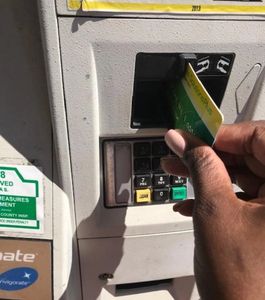
 1-2-3 Driver Instructions 

  • Swipe card
  • Enter driver ID when prompted (may also be call DIN or PIN)
  • Enter odometer reading when prompted
  • The principal or owner is not personally liable for any bad debt.
  • The account will be in the name of the business.
  • Helps to Establish & build business credit.
  • Account payment history reported to DnB and Equifax every 30 days.
  • Accepted at over 18,000 locations Worldwide.
  • Free online invoicing.
  • Activate new cards as needed.
  • Restrict cards with fuel only limits & purchase restrictions during non-business hours.
  • Save up to 6¢/gal* on fuel purchases at thousands of locations in the U.S.
  • Earn rebates on fuel at branded locations.

 GET YOUR CARD NOW! 


Business Taxes, Family Taxes, General Information, General Tax Topics, Self Employed, Small Business, Tax Debt, Tax Deductions, Tax Reduction, Uncategorized

Now that you’ve filed, do you need to tell your employer to withhold more or less income to pay your 2019 taxes?

man holding white paper

Reprinted with changes, edits, & permission by the IRS.

Was your refund lower than expected, or did you have an unexpected tax bill when you filed this year? In our south loop Chicago tax preparation office, we saw a slight decrease in income tax refunds for personal 1040 taxes. On the other hand, many of our Chicago business tax preparation clients saw a decrease in their taxes dues thanks to the Tax Cut and Jobs Act. If you are concerned about your tax bill for the 2019 tax year, there are steps that you can take steps to make sure your federal income tax withholding is on the right track for this year.
Checking your withholding at the beginning of the year helps ensure you don’t have too little or too much withheld from your paychecks throughout the year. This is especially
important if you changed your withholding in 2018. A mid-year withholding change in 2018 can have a different full-year impact in 2019. You should also check your withholding any time your personal or financial information changes. Use the Withholding Calculator to help you decide whether you need to change your
withholding.

newsletter
Federal taxes operate on a pay-as-you-go basis. This means that you need to pay most of your tax during the year, as you earn the income. Paying too much tax throughout the year will result in a refund while not paying enough can lead to a tax bill, penalties and interest when you file. One way to avoid owing a balance is to correctly calculate and adjust how much tax you should have withheld from your wages. Use the Withholding Calculator to help you decide whether you need to change your withholding.

Another option is to consider making quarterly estimated tax payments. Those who
don’t pay taxes through withholding, or don’t pay enough tax that way, may still use the Withholding Calculator to determine if they have to pay estimated tax quarterly during the year to the IRS. Those who are self-employed generally pay tax this way. See Form
1040-ES, Estimated Taxes for Individuals, for details. Visit IRS.gov/payasyougo to learn more about withholding and to determine if you should be making estimated tax payments. You are in the driver’s seat. Check your withholding today.

Although we’ve given you the basics, this is not an all-inclusive article. Should you have tax debt help questions, need Chicago business tax preparation, business entity creation, business insurance, or business compliance assistance please contact us online, or call our office toll free at 1-855-743-5765 or locally in Chicago or Indiana at 1-708-529-6604. Make sure to join our newsletter for more tips on reducing taxes, and increasing your wealth.

Schedule-button-nb

Never miss another tip again! Join our newsletter, to receive tax reduction/wealth building tips delivered right to your inbox!
newsletter

Business Taxes, Family Taxes, General Information, General Tax Topics, Self Employed, Small Business, Tax Debt, Tax Deductions, Tax Reduction, Uncategorized

Owe taxes? What to do when you owe the IRS.

Listen, I’ve been there. You know the place where you’re afraid to open the notice from the IRS because you think they are coming for your right arm and both legs? The place where you KNEW that you should have been paying more through out the year, but you needed your money, so you chose go exempt from Federal taxes? Or how about the place where you thought you were paying enough to the IRS, and to your surprise you wound up with a tax bill! Listen to this quick podcast below by clicking the play button, or listen on iTunes by searching “small biz tax lady.”

//html5-player.libsyn.com/embed/episode/id/9334172/height/360/theme/legacy/thumbnail/yes/direction/backward/

I talk about if you should file, your payment options, and why you need to read your IRS notices. If you have a more complicated case (such as refund taken due to spousal debt, IRS wage garnishments, or a pending levy, please call us immediately at 855-743-5765 or email me directly at thoward@howardtaxprep.com

Have a podcast idea? Send me your suggestions at podcast@howardtaxprep.com or inbox me.


Business Taxes, Family Taxes, General Information, General Tax Topics, Self Employed, Small Business, Tax Deductions, Tax Reduction, Uncategorized

Let’s face it, no one really likes to pay taxes.

Spanky little rascals

Author Trudy M. Howard

Let’s face it, no one really likes to pay taxes.

Unfortunately, while most Americans don’t like to pay taxes, we know that taxes have to be paid. As a self employed person, and business owner, not only do you have to pay local & state taxes, but you must also make Federal estimated tax payments throughout the year. Whenever I work with Chicago South Loop small business tax preparation customers, I find that they are often very surprised to hear about the estimated tax concept.

The American tax system is a a pay as you go system, not a pay once a year, or pay when you feel like it system. According to the IRS, “taxpayers must generally pay at least 90 percent of their taxes throughout the year through withholding, estimated tax payments or a combination of the two. If they don’t, they may owe an estimated tax penalty.” In most cases, you must pay estimated tax for 2019 if both of the following apply: 1. You expect to owe at least $1,000 in tax for 2019, after subtracting your withholding and refundable credits. You expect your withholding and refundable credits to be less than the smaller of: a. 90% of the tax to be shown on your 2019 tax return, or b. 100% of the tax shown on your 2018 tax return. Your 2018 tax return must cover all 12 months.

If you are a self employed driver (think UBER, LYFT, DOORDASH), contractor, real estate agent, barber, beautician, makeup artist, blogger, home care provider, etc. you need to have an EFTPS® account to make your Federal estimated tax payments. EFTPS® is a system for paying federal taxes electronically using the Internet, or by phone using the EFTPS® Voice Response System. EFTPS® is offered free by the U.S. Department of Treasury, however, you must setup an account to use the system. Listed below are the estimated quarterly tax payment dates for sole proprietors, and the quarterly payment dates for S-corp owners and C-corporations.

Estimated tax payment due dates for 2019:

April 15, 2019: Income tax due date AND the due date for your first quarterly estimated tax (QET) payment. In April, you’ll pay quarterly estimated taxes on the income you made in January, February, and March 2019.

June 17, 2019: This is when you’ll pay quarterly estimated taxes on the income you made in April, May, and June 2019.

September 16, 2019: Quarterly estimated taxes for the months of July, August, and September 2019 are due on this date.

January 15, 2020: Quarterly estimated taxes for the months of October, November, and December 2019 are due on this date.

For those that are S-corps or Corps. Remember that you are considered an employee, and a shareholder. This means that you’ll need to pay your income, social security, and Medicare taxes as the employer & the employee. In addition to making the deposits, you will also need to file quarterly payroll tax return. C-corporation owners will need to file estimated taxes on the corporations income, and file a 941 quarterly payroll return.

Here are the quarterly payroll tax return due dates for 2019:

April 30, 2019: File Form 941 – Employer’s Quarterly Federal Tax Return. If you made all required payments in full by the due dates, you have 10 more days to submit this form (by February 10).

July 31st 2019: File Form 941 – Employer’s Quarterly Federal Tax Return. If you made all required payments in full by the due dates, you have 10 more days to submit this form

October 31 2019 File Form 941 – Employer’s Quarterly Federal Tax Return. If you made all required payments in full by the due dates, you have 10 more days to submit this form.

January 31, 2020: File Form 941 – Employer’s Quarterly Federal Tax Return. If you made all required payments in full by the due dates, you have 10 more days to submit this form.

Although we’ve given you the basics, this is not an all-inclusive article. Should you have tax debt help questions, need Chicago business tax preparation, business entity creation, business insurance, or business compliance assistance please contact us online, or call our office toll free at 1-855-743-5765 or locally in Chicago or Indiana at 1-708-529-6604. Make sure to join our newsletter for more tips on reducing taxes, and increasing your wealth.

Schedule-button-nb

Never miss another tip again! Join our newsletter, to receive tax reduction/wealth building tips delivered right to your inbox!

newsletter
download