

Business Taxes, General Information, General Tax Topics, Self Employed, Small Business, Tax Deductions, Uncategorized, Vehicles

Commercial Fuel Card Without A Personal Guarantee.

gas card

Commercial Fuel Card

Gas Cards Without A Personal Guarantee

Would you like to free up some cash so that you can increase your marketing budget, purchase more supplies, or reward your employees? Have you heard about obtaining business credit without a personal guarantee, but haven’t been able to secure your own business credit? Are you a small business owner that has damaged personal credit? Have you been told that you can’t get business credit if you have bad personal credit? If any of these things apply to you, you’ve come to the right place!
To start, let us explain what a “personal guarantee is.” A personal guarantee means that the owners will be held personally liable for the debts of their business. Suppose you have a LLC Howard Tax Prep LLC has partnered with a national gas chain (comparable with Exon Mobil, Citgo, etc. with over 18,000 locations worldwide) to offer small business owners (being defined as businesses with revenues under 1 million dollars) fuel cards that report business payment history to Dunn and Brad Street, and Equifax every 30 days!
bp 2

Only verified businesses that are structured as a LLC, S-Corp, or C-Corp with a Dun and Brad Street number will qualify. Because this is not a publicly marketed program, your business must be verified, prior to receiving the name of the fuel company (but trust us, you can find a station near you).  

The best part about this offer? THE CARDS ARE ISSUED WITHOUT ANY PERSONAL LIABILITY TO THE OWNERS, & WITHOUT THE USE OF THE OWNERS PERSONAL CREDIT. If you need a truck driver fuel card, Uber driver fuel card, Lyft driver fuel card, or just a general small business owner fuel card, we can help! 

WHAT ARE THE DETAILS?

  • National fuel provider. Qualified businesses that are ready to move forward will be given the name of the fuel company prior to paying the 1 time $49.95 Howard Tax Prep LLC processing fee.
  • Minimum deposit of $200 for a $500 credit line is required.
  • Accounts are reviewed every quarter for credit line increases.
  • After 12 months of ON TIME PAYMENTS, your deposit will be returned.

WHAT ARE THE REQUIREMENTS?

  • Business Must Be Structured As A LLC, Corporation, or S-corporation.
  • Must have a BUSINESS CHECKING account.
  • Must Agree To Make ON-TIME Payments.
  • Deposit Payment Can Only Be Drafted From Business Checking account.

Who should use fuel cards?

Owner Operator Truck Driver

image40

Owner Operator Truck Drivers no longer have to use personal credit cards or cash profits to purchase fuel! Reduce driver fraud by setting fuel limits & restricting usage. Save on fuel cost, while building your business credit Paydex score.     

  • The principal or owner is not personally liable for any bad debt.
  • The account will be in the name of the business.
  • Helps to Establish & build business credit.
  • Account payment history reported to DnB and Equifax every 30 days.
  • Accepted at over 18,000 locations Worldwide.
  • Free online invoicing.
  • Activate new cards as needed.
  • Restrict cards with fuel only limits & purchase restrictions during non-business hours.
  • Save up to 6¢/gal* on fuel purchases at thousands of locations in the U.S.
  • Earn rebates on fuel at branded locations.

GET YOUR CARD NOW!

Small Business Owner

image41

Small business owners no more using your profits & personal credit cards to cover fuel cost. Use the cash you save and apply it toward marketing, inventory, and more! Save on fuel cost, while building your business credit Paydex score. 

  • The principal or owner is not personally liable for any bad debt.
  • The account will be in the name of the business.
  • Helps to Establish & build business credit.
  • Account payment history reported to DnB and Equifax every 30 days.
  • Accepted at over 18,000 locations Worldwide.
  • Free online invoicing.
  • Activate new cards as needed.
  • Restrict cards with fuel only limits & purchase restrictions during non-business hours.
  • Save up to 6¢/gal* on fuel purchases at thousands of locations in the U.S.
  • Earn rebates on fuel at branded locations.

GET YOUR CARD NOW! 

Uber & Lyft Driver

image42

Uber and Lyft Drivers that would like to build their business credit, and free up their cash flow. Use your additional cash flow for brake repairs, oil changes, and more! Save on fuel cost, while building your business credit Paydex score.  

  • The principal or owner is not personally liable for any bad debt.
  • The account will be in the name of the business.
  • Helps to Establish & build business credit.
  • Account payment history reported to DnB and Equifax every 30 days.
  • Accepted at over 18,000 locations Worldwide.
  • Free online invoicing.
  • Activate new cards as needed.
  • Restrict cards with fuel only limits & purchase restrictions during non-business hours.
  • Save up to 6¢/gal* on fuel purchases at thousands of locations in the U.S.
  • Earn rebates on fuel at branded locations.

 GET YOUR CARD NOW!  

How easy it to use the card?

image43

 1-2-3 Driver Instructions 

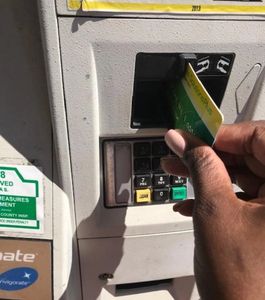
  • Swipe card
  • Enter driver ID when prompted (may also be call DIN or PIN)
  • Enter odometer reading when prompted
  • The principal or owner is not personally liable for any bad debt.
  • The account will be in the name of the business.
  • Helps to Establish & build business credit.
  • Account payment history reported to DnB and Equifax every 30 days.
  • Accepted at over 18,000 locations Worldwide.
  • Free online invoicing.
  • Activate new cards as needed.
  • Restrict cards with fuel only limits & purchase restrictions during non-business hours.
  • Save up to 6¢/gal* on fuel purchases at thousands of locations in the U.S.
  • Earn rebates on fuel at branded locations.

 GET YOUR CARD NOW! 


Business Taxes, Family Taxes, General Information, General Tax Topics, Self Employed, Small Business, Tax Debt, Tax Deductions, Tax Reduction, Uncategorized

Now that you’ve filed, do you need to tell your employer to withhold more or less income to pay your 2019 taxes?

man holding white paper

Reprinted with changes, edits, & permission by the IRS.

Was your refund lower than expected, or did you have an unexpected tax bill when you filed this year? In our south loop Chicago tax preparation office, we saw a slight decrease in income tax refunds for personal 1040 taxes. On the other hand, many of our Chicago business tax preparation clients saw a decrease in their taxes dues thanks to the Tax Cut and Jobs Act. If you are concerned about your tax bill for the 2019 tax year, there are steps that you can take steps to make sure your federal income tax withholding is on the right track for this year.
Checking your withholding at the beginning of the year helps ensure you don’t have too little or too much withheld from your paychecks throughout the year. This is especially
important if you changed your withholding in 2018. A mid-year withholding change in 2018 can have a different full-year impact in 2019. You should also check your withholding any time your personal or financial information changes. Use the Withholding Calculator to help you decide whether you need to change your
withholding.

newsletter
Federal taxes operate on a pay-as-you-go basis. This means that you need to pay most of your tax during the year, as you earn the income. Paying too much tax throughout the year will result in a refund while not paying enough can lead to a tax bill, penalties and interest when you file. One way to avoid owing a balance is to correctly calculate and adjust how much tax you should have withheld from your wages. Use the Withholding Calculator to help you decide whether you need to change your withholding.

Another option is to consider making quarterly estimated tax payments. Those who
don’t pay taxes through withholding, or don’t pay enough tax that way, may still use the Withholding Calculator to determine if they have to pay estimated tax quarterly during the year to the IRS. Those who are self-employed generally pay tax this way. See Form
1040-ES, Estimated Taxes for Individuals, for details. Visit IRS.gov/payasyougo to learn more about withholding and to determine if you should be making estimated tax payments. You are in the driver’s seat. Check your withholding today.

Although we’ve given you the basics, this is not an all-inclusive article. Should you have tax debt help questions, need Chicago business tax preparation, business entity creation, business insurance, or business compliance assistance please contact us online, or call our office toll free at 1-855-743-5765 or locally in Chicago or Indiana at 1-708-529-6604. Make sure to join our newsletter for more tips on reducing taxes, and increasing your wealth.

Schedule-button-nb

Never miss another tip again! Join our newsletter, to receive tax reduction/wealth building tips delivered right to your inbox!

newsletter

Business Taxes, Family Taxes, General Information, General Tax Topics, Self Employed, Small Business, Tax Debt, Tax Deductions, Tax Reduction, Uncategorized

Owe taxes? What to do when you owe the IRS.

Listen, I’ve been there. You know the place where you’re afraid to open the notice from the IRS because you think they are coming for your right arm and both legs? The place where you KNEW that you should have been paying more through out the year, but you needed your money, so you chose go exempt from Federal taxes? Or how about the place where you thought you were paying enough to the IRS, and to your surprise you wound up with a tax bill! Listen to this quick podcast below by clicking the play button, or listen on iTunes by searching “small biz tax lady.”

//html5-player.libsyn.com/embed/episode/id/9334172/height/360/theme/legacy/thumbnail/yes/direction/backward/

I talk about if you should file, your payment options, and why you need to read your IRS notices. If you have a more complicated case (such as refund taken due to spousal debt, IRS wage garnishments, or a pending levy, please call us immediately at 855-743-5765 or email me directly at thoward@howardtaxprep.com

Have a podcast idea? Send me your suggestions at podcast@howardtaxprep.com or inbox me.


Family Taxes, General Information, General Tax Topics, Tax Deductions, Uncategorized

If You Hear This Advice on How to Cut Your Taxes, Stay Away

young friends

When it comes to tax advice, be careful whom you trust. In our south loop of Chicago tax preparation office, we hear a number of tax tips for small business owners that aren’t based in tax law.

There is some remarkably bad and wrong and hazardous-to-your-health information out there that—despite being repeatedly debunked—just will not go away. Some of those ideas are clearly erroneous, but others can snag even very bright people.

Consider the case of Carter White Rae, a dentist in Michigan. He followed some bad advice and ended up with a bill from the government for over half a million dollars—plus a 45-month jail sentence.

Remember: You may be a logical person, but tax law is not always logical. Even if something makes sense to you—or sounds like it’s the way the law should work—it may still be completely wrong.

That’s why you have me in your corner. And that’s why you should ask me before you take an action that seems too good to be true.

The most dangerous tax strategies are the ones that lead you to believe you do not have to pay any tax at all. Known in IRS lingo as “tax protestor” arguments, they claim that by virtue of little-known quirks in the law or because of never-correctly-ratified amendments, you can somehow sidestep all U.S. tax requirements.

No matter how intricate those arguments can be, they all suffer from the same problem: The IRS and courts reject them. The government has already ruled against them, and if you use one of those arguments, the government will eventually catch up with you and demand its money. It’s a question of when, not if.

Take It from the IRS

The IRS was nice enough to compile a list of arguments that it has heard before and will categorically reject:

  1. The filing of a tax return or the payment of federal income tax is voluntary.
  2. Taxpayers can reduce their federal tax liability by filing a “zero return” that reports zero income and zero tax liability.
  3. Compensation received for personal services isn’t income.
  4. Military retirement pay isn’t income.
  5. Only foreign-source income is taxable.
  6. The IRS isn’t a U.S. agency.
  7. The taxpayer isn’t a citizen and therefore isn’t subject to federal income taxes.
  8. The taxpayer isn’t a “person” under the tax law and therefore isn’t subject to federal income taxes.
  9. Various constitutional amendments permit the taxpayer to avoid taxes.
  10. Form 1040’s instructions and regulations don’t have an OMB control number as required by the federal Paperwork Reduction Act.

Penalties and Prison

The IRS believes that tax protestor claims are “frivolous” and will have no mercy on you if you rely on one to avoid paying taxes. The courts tend to agree and uphold those penalties—and sometimes impose prison time as well.

Whenever you “willfully attempt to evade or defeat” your taxes, you’re looking at fines of up to $100,000 ($500,000 for corporations) and prison time of up to five years. That’s on top of having to pay the taxes due, the prosecution’s costs, and any other penalties.

How to Spot Bad Strategies

With tax law as complicated as it is, how are you supposed to tell the difference between a legitimate tax reduction strategy and a baseless idea that will get you in trouble?

The main problem with tax protestor arguments is that they claim to let you ignore the plain language of the law—simply by saying that the IRS isn’t legitimate or that you aren’t subject to the rules.

Real tax strategies work within the law, finding deductions or ways to reduce your income that the tax code or IRS have explicitly blessed—rather than going around the law or ignoring it.

Although we’ve given you the basics, this is not an all-inclusive article. Should you have tax debt help questions, need Chicago business tax preparation, business entity creation, business insurance, or business compliance assistance please contact us online, or call our office toll free at 1-855-743-5765 or locally in Chicago or Indiana at 1-708-529-6604. Make sure to join our newsletter for more tips on reducing taxes, and increasing your wealth.

Schedule-button-nb

Never miss another tip again! Join our newsletter, to receive tax reduction/wealth building tips delivered right to your inbox!

newsletter

Business Taxes, General Information, General Tax Topics, Self Employed, Small Business, Tax Deductions, Uncategorized

How the 90-Day Mileage Log Rule Works for You

fashion woman notebook pen

Often in an IRS audit, the examiner will ask for your mileage log at the beginning of the audit. If you do not have a mileage log, then you are in danger of losing more than just vehicle deductions. Think about it. If you don’t have a log for mileage, what is the IRS examiner going to think about your other records? Right—he or she is going to think you are a bad taxpayer with bad tax records who needs extra scrutiny.

The IRS says that you may keep an adequate record for part of a tax year and use that part-year record to substantiate your vehicle’s business use for the entire year. To use a sample record, you need to prove that your sample is representative of your use for the year.

By using your appointment book as the basis for your mileage, you not only build great business-use proof, but you also do a great job of showing that your sample vehicle record mirrors your general appointments during the year. (If you are using a mileage app, synchronize the app results with the appointment book.)

The IRS illustrates two possible sampling methods:

  • One identical week each month (for example, the third week of each month)
  • Three consecutive months

We don’t recommend the one-same-week-each-month method because it is difficult to start and stop a record-keeping process. (Think about how hard it would be to create a habit, undo it, and then create it again—every month.)

For this reason, the three-month log is the superior alternative. Before getting into the three-month method, we should note that once you have done three months, you are in the habit. You might find it easier to continue all year, rather than stop this year and then have to start again next year.
newsletter
Here are the basics of how the IRS describes the three-month test:

  • The taxpayer uses her vehicle for business use.
  • She and other members of her family use the vehicle for personal use.
  • The taxpayer keeps a mileage log for the first three months of the taxable year, and that log shows that 75 percent of the vehicle’s use is for her business.
  • Invoices and paid bills show that her vehicle use is about the same throughout the year.

According to this IRS regulation, this three-month sample is adequate to prove 75 percent business use.

Although we’ve given you the basics, this is not an all-inclusive article. Should you have tax debt help questions, need Chicago business tax preparation, business entity creation, business insurance, or business compliance assistance please contact us online, or call our office toll free at 1-855-743-5765 or locally in Chicago or Indiana at 1-708-529-6604. Make sure to join our newsletter for more tips on reducing taxes, and increasing your wealth.

Schedule-button-nb

Never miss another tip again! Join our newsletter, to receive tax reduction/wealth building tips delivered right to your inbox!

newsletter

Fact check me with IRS Regulation 1.274-5T(c)(3)(ii)(A).